HCA Dams
HCA owns and operates two water-control dams: Valens Lake Dam and Christie Lake Dam.
In general, dam operations involve the following:
- Maintaining information and knowledge base on the influences of the dams on upstream and downstream watercourse conditions.
- Maintaining and utilizing the reservoir level and rain monitoring network, which provides current and past reservoir levels and rainfall amounts at the dams.
- Assessing and implementing changes to dam outflows, to maintain suitable reservoir levels and downstream watercourse conditions, taking into account current and forecasted future conditions.
- During storms and snowmelt, the operation focus is on temporarily storing water and reducing maximum water levels in downstream sections of Spencer Creek.
- During dry periods, the operation focus is on managing available reservoir water to maintain minimum target water levels in Spencer Creek.
- Undertaking daily, routine, annual, and storm event inspections.
- Completing required maintenance and repairs, based on internal and external inspections.
Additionally, the reservoirs provide many recreational activities for people, and habitat for wildlife, including birds and fish.
HCA Dam Information
Learn even more about the Valens Lake and Christie Lake dams below:
Valens Lake Dam Information
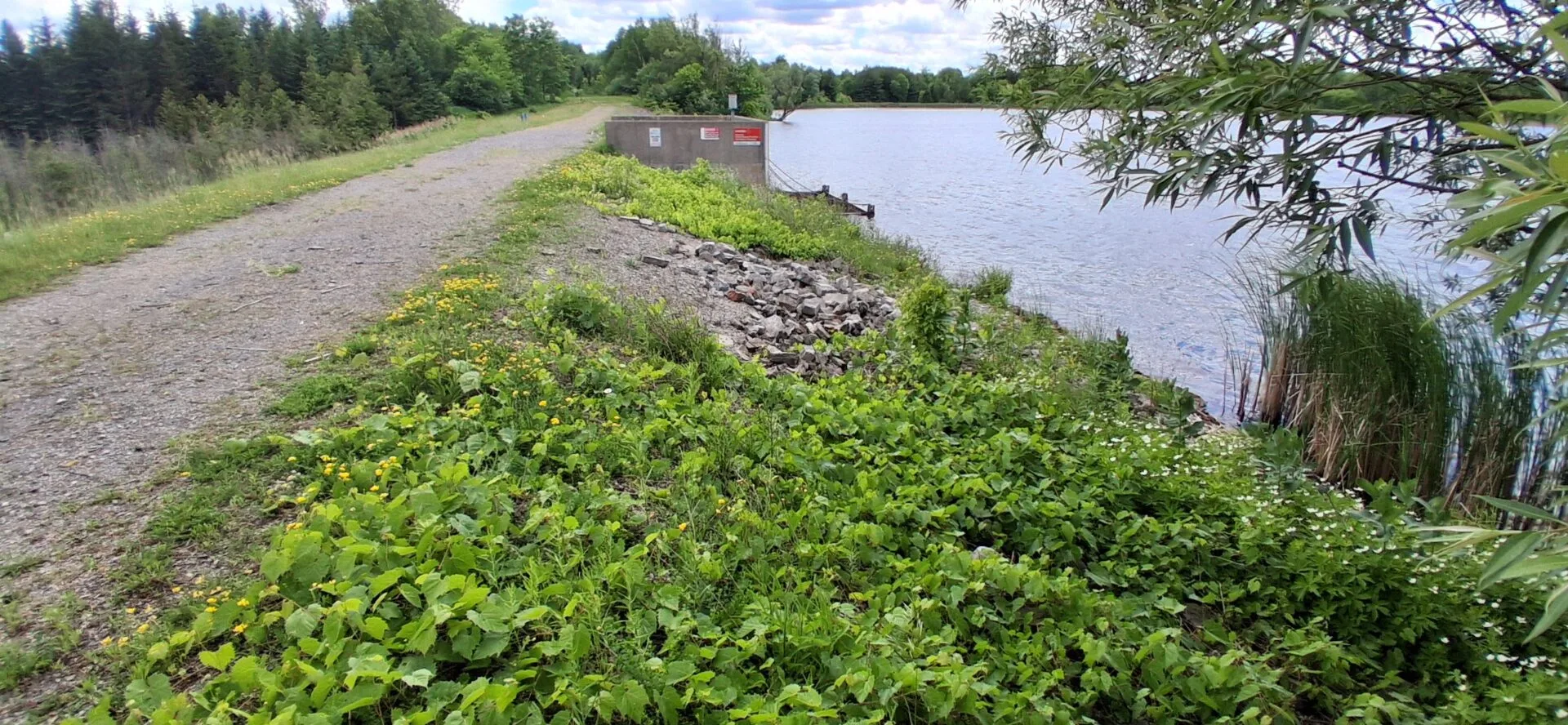
- The land associated with the reservoir was acquired by HCA in the mid-1960s.
- The Valens Lake Dam was completed in 1966.
- The reservoir officially opened to the public in June 28, 1968.
- The dam is located near the John Valens homestead, which is also its namesake. The homestead remains on the property and is of historic value.
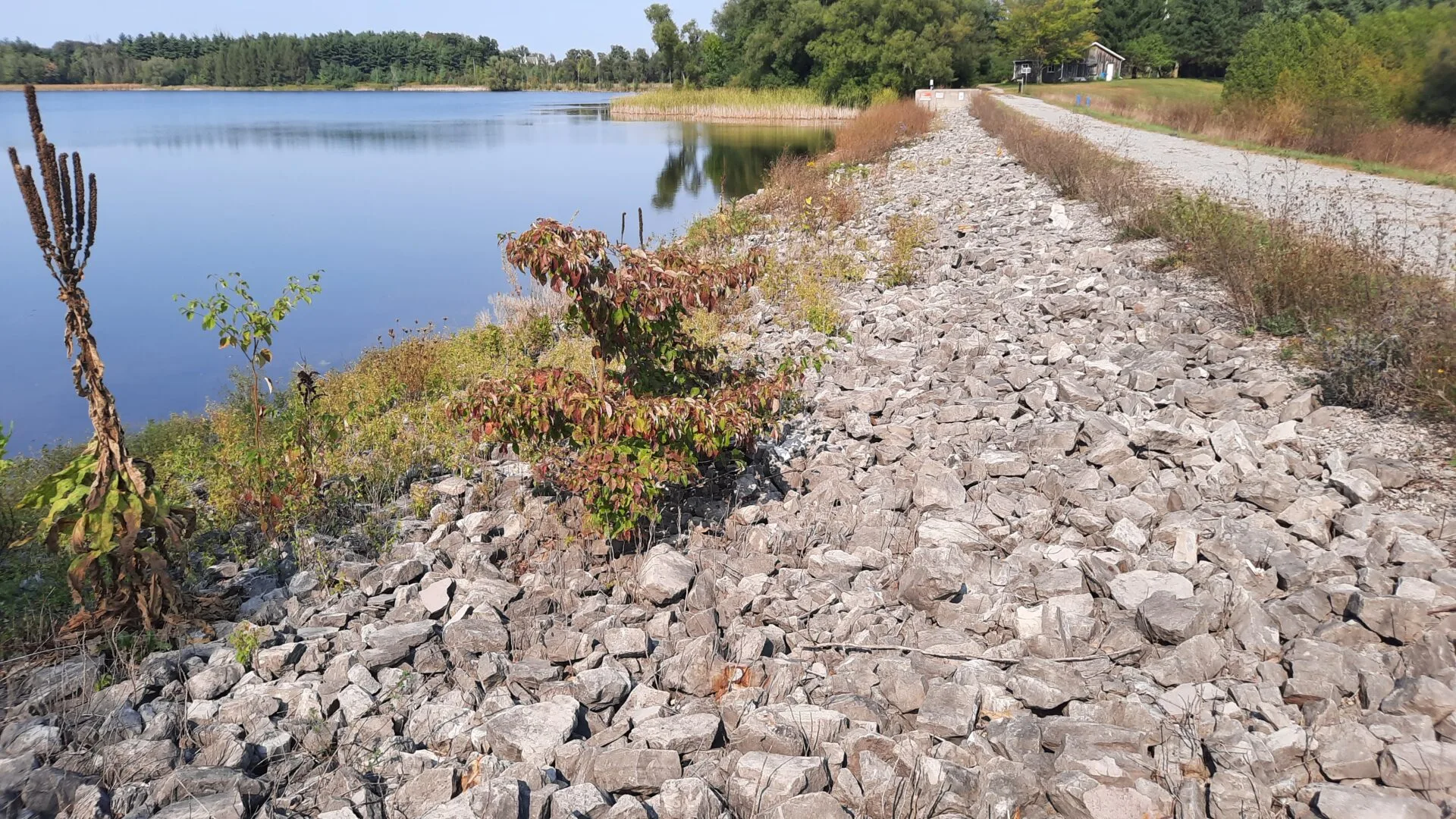
- When the dam was built, it flooded the former farmers fields. Sbmerged ruins of the farm fields, stone rock piles remain visible at the reservoir shoreline.
- The dam was built by HCA to prevent seasonal flooding and to provide cold-water reserves during drought periods.
- Located 16 km upstream of the Christie Lake Dam reservoir.
- Underwent major rehabilitation in 2005 to raise the dam.
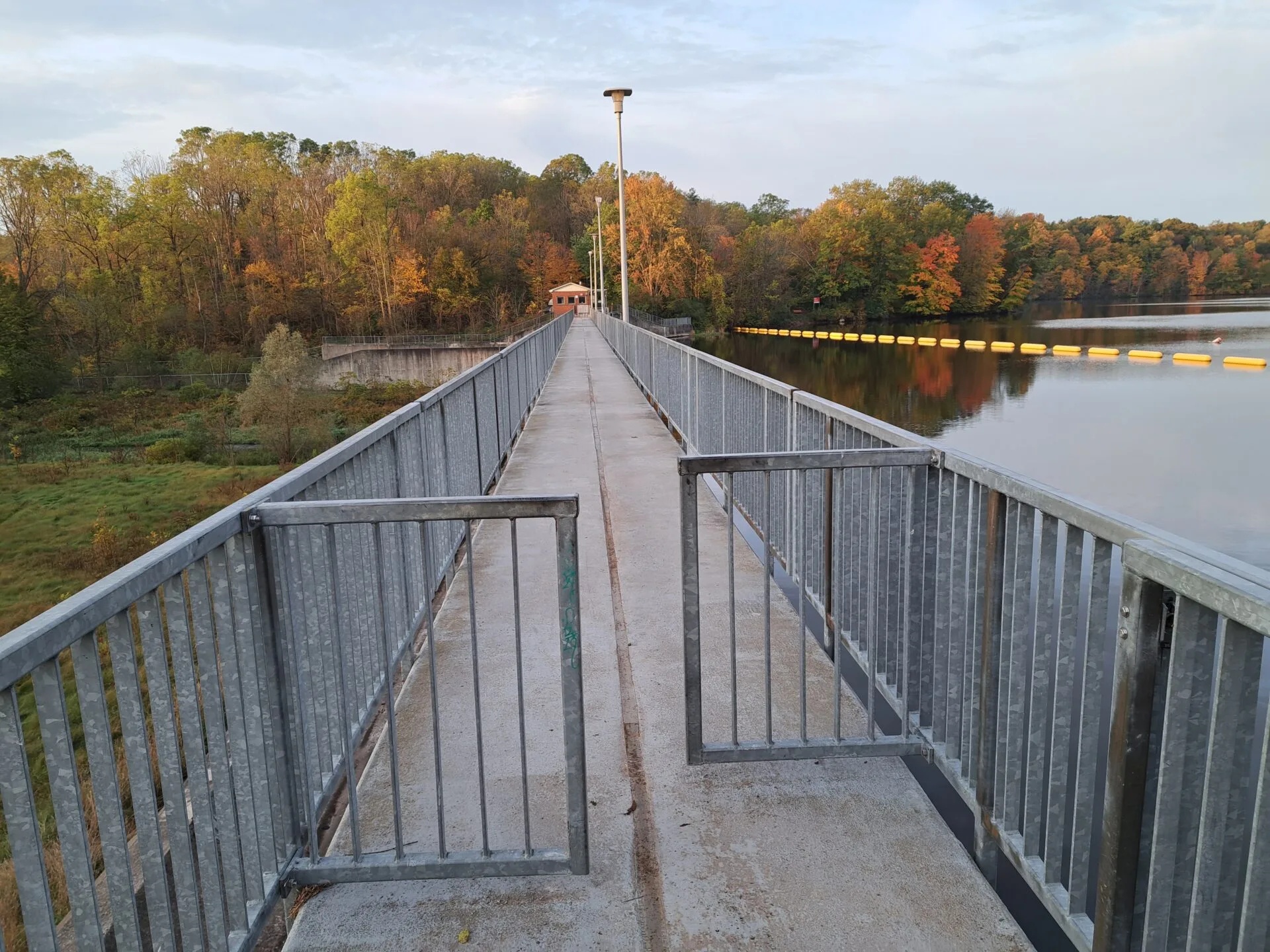
- 122 m long earth-fill embankment dam.
- 10.9 km² catchment area drains into Valens Lake.
- Reservoir size:
- Winter storage: 0.293 km²
- Summer storage: 0.749 km²
- Maximum storage: 1.093 km²
Typical dam operations:
- During storms and snowmelt, Valens Lake Dam temporarily stores water and reduces maximum water levels in downstream Upper Spencer Creek. The dam includes a drop inlet structure, which includes removable stoplogs and one low-flow valve
- In late fall, reservoir levels are gradually lowered, and the stoplogs are removed to increase the space available to store water in the reservoir during winter storms and early spring melt. In late spring, reservoir levels are gradually raised, and stoplogs are installed during periods of increased flow from spring rains. The raised reservoir levels are then maintained, where possible, through the summer and fall.
- Reservoir levels, dam outflows, and downstream water levels in Upper Spencer Creek are managed through changes in how much the low flow valve is open
Typical reservoir water levels:
- Winter (December to March): 274.15 to 274.40 m ASL
- Summer (May to October): 275.25 to 775.45 m ASL
Valens Lake Dam
Christie Lake Dam Information
- The concept of the Christie Lake Reservoir was born in 1958 when the newly-formed Spencer Creek Conservation Authority (now the Hamilton Conservation Authority) was investigating solutions to reduce flooding issues in Dundas.
- In 1962, the Spencer Creek Conservation Authority began purchasing land in the area to build a flood-control structure, such as a dam.
- Construction began in 1970, the dam was completed in 1972, and Christie Lake Conservation Area opened in 1974.
- The Dam underwent major rehabilitation in 2004 to repair concrete deterioration and install new sectional gates.
- Located 16 km downstream from the Valens Lake dam reservoir.
- Largest flood control structure in HCA’s watershed.
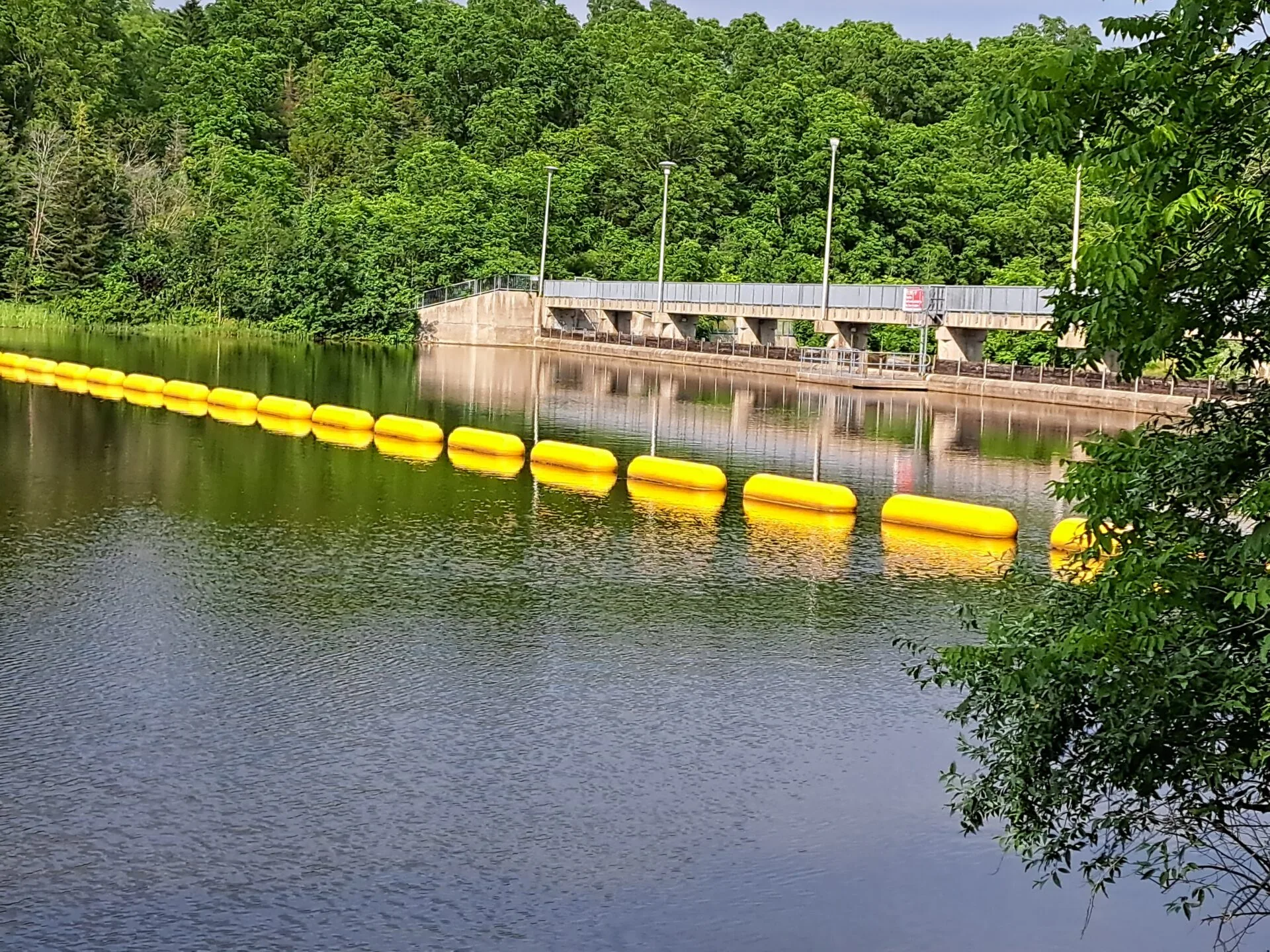
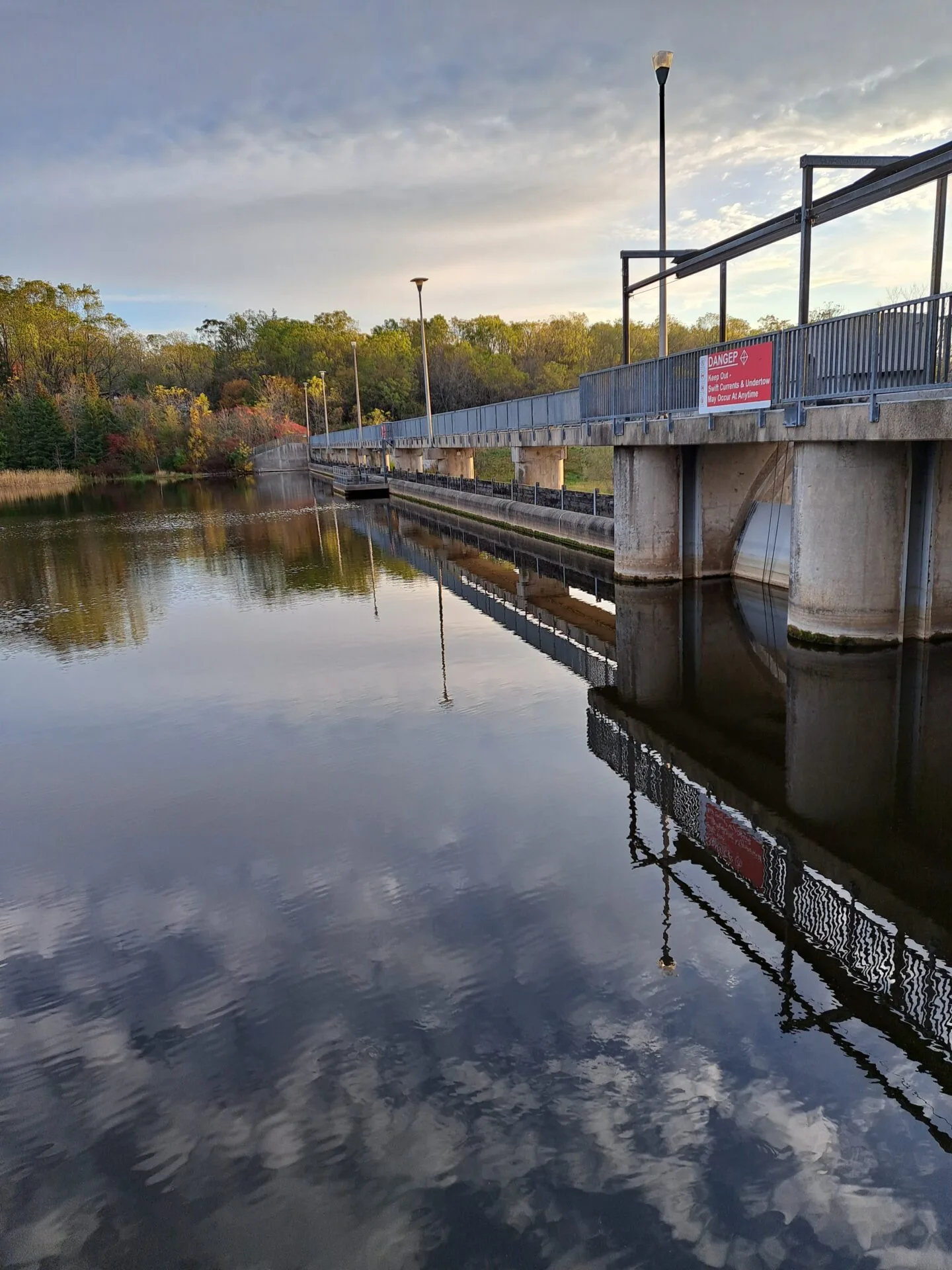
- 109 m long concrete overflow spillway, 74 m long earth dam, totalling 183 m in length.
- 153.05 km² catchment area drains into Christie Lake.
- Reservoir size:
- Winter storage: 0.239 km²
- Summer storage: 0.715 km²
- Maximum storage: 1.62 km²
Typical dam operations:
- During storms and snowmelt, Christie Lake Dam temporarily stores water and reduces maximum water levels in downstream Lower Spencer Creek. During dry periods, reservoir water is also used to maintain low flows in Lower Spencer Creek.
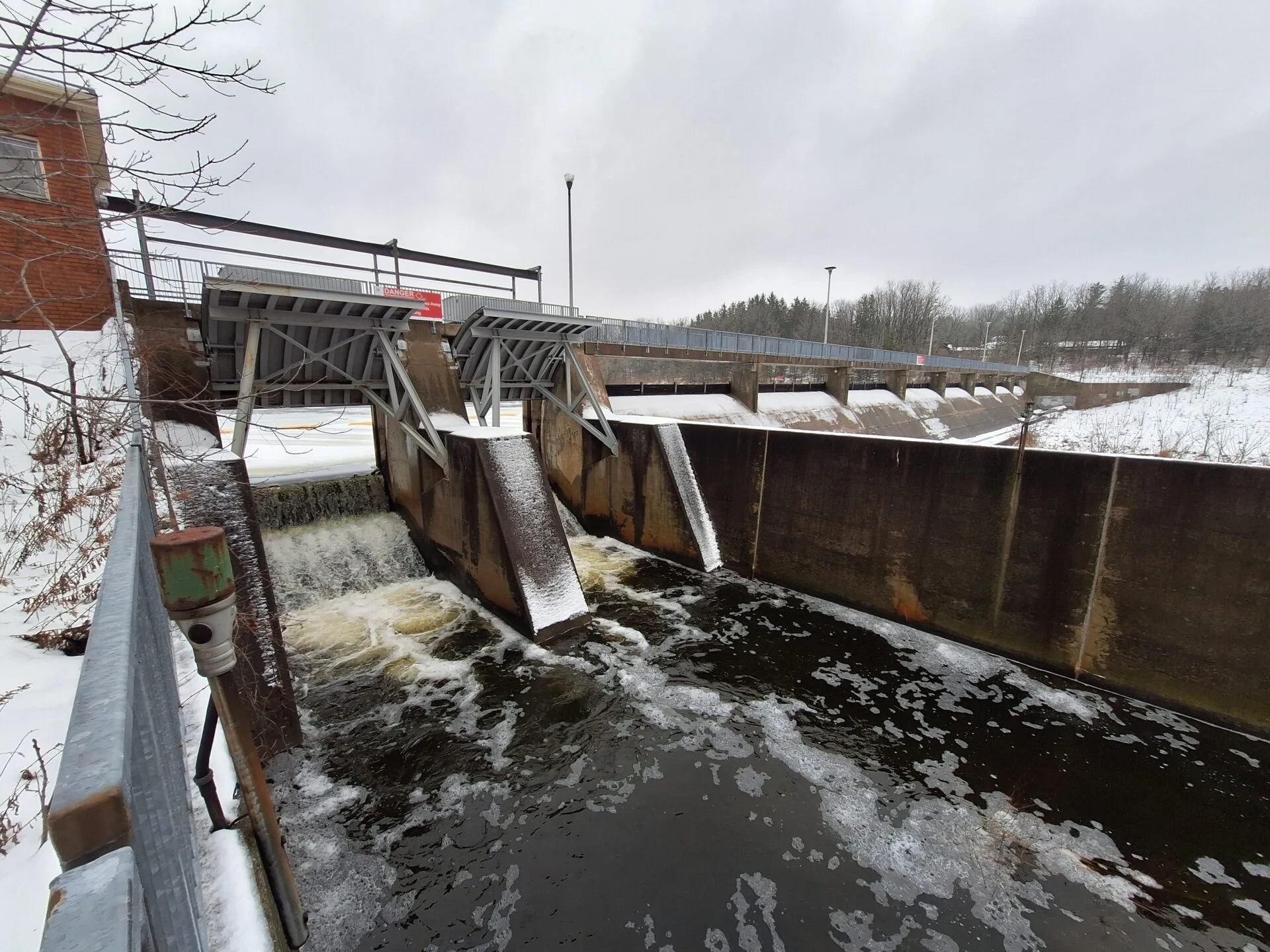
- The dam includes two 5 m wide radial gates and two large 5 m wide winter gates that replace the radial gates in the winter. Also has a drop inlet structure, which includes three low-flow valves, and an overflow spillway.
- In late fall, reservoir levels are gradually lowered to increase the space available to store water during winter storms and early spring melt. In late spring, reservoir levels are gradually raised during periods of increased flow from spring rains. The raised reservoir levels are then maintained, where possible, through the summer and fall.
- Reservoir levels, dam outflows, and downstream water levels in Lower Spencer Creek are managed by adjusting how open the radial gates and low-flow valves are.
- Christie Lake Dam can potentially reduce maximum flows in downstream Lower Spencer Creek by up to 35%, depending on the size of the storm event. For example, due to the Christie Lake Dam, the maximum flow downstream is reduced from 52.0 m3/s to 34.0 m3/s during a 100-year storm event.
Typical reservoir water levels:
- Winter (December to March): 765.3 to 765.8 ft ASL
- Summer (May to October): 771.0 to 771.5 ft ASL