
Phragmites (phragmites australis) is an aggressive tall grass that was identified as Canada’s ‘worst’ invasive plant in 2005 by researchers at Agriculture and Agri-food Canada. Phragmites can survive in disturbed habitats, in water, alongside the water’s edge and on dry land.
What does it look like?
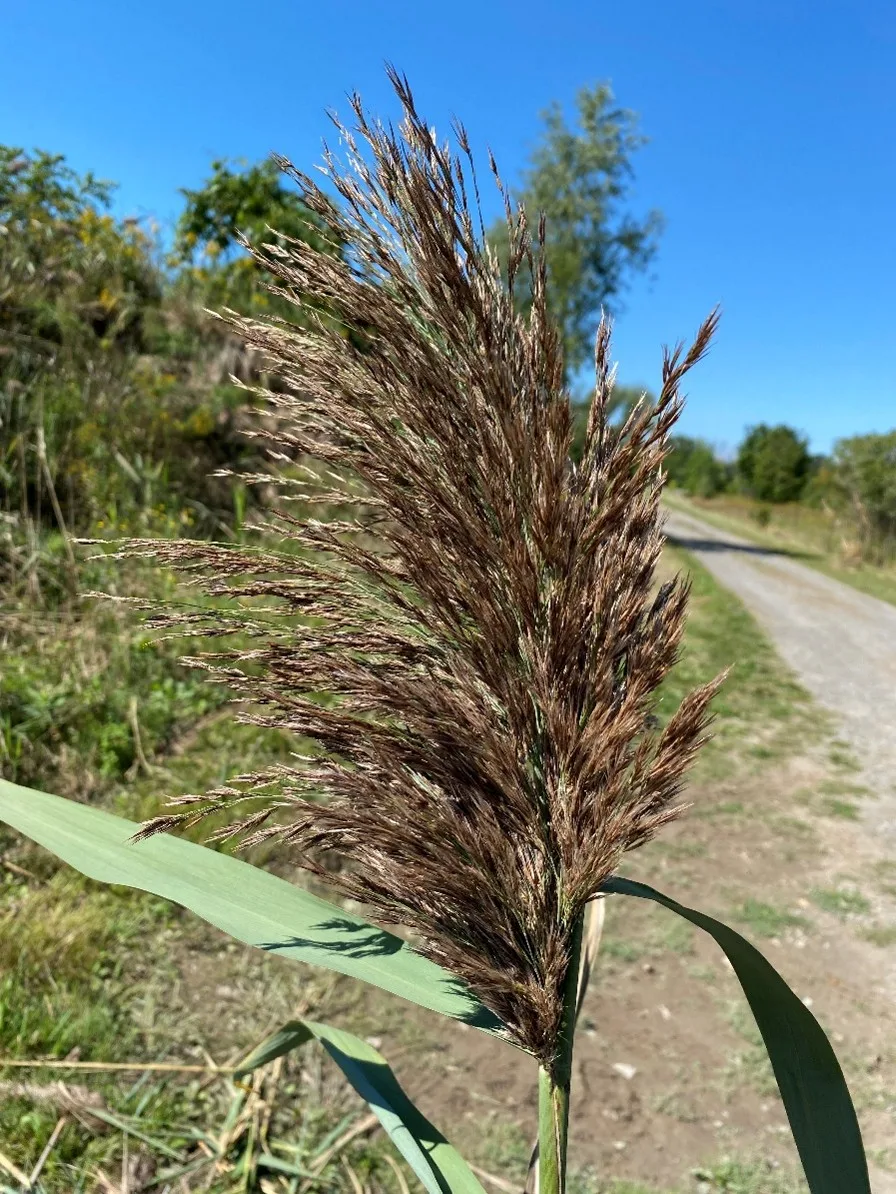
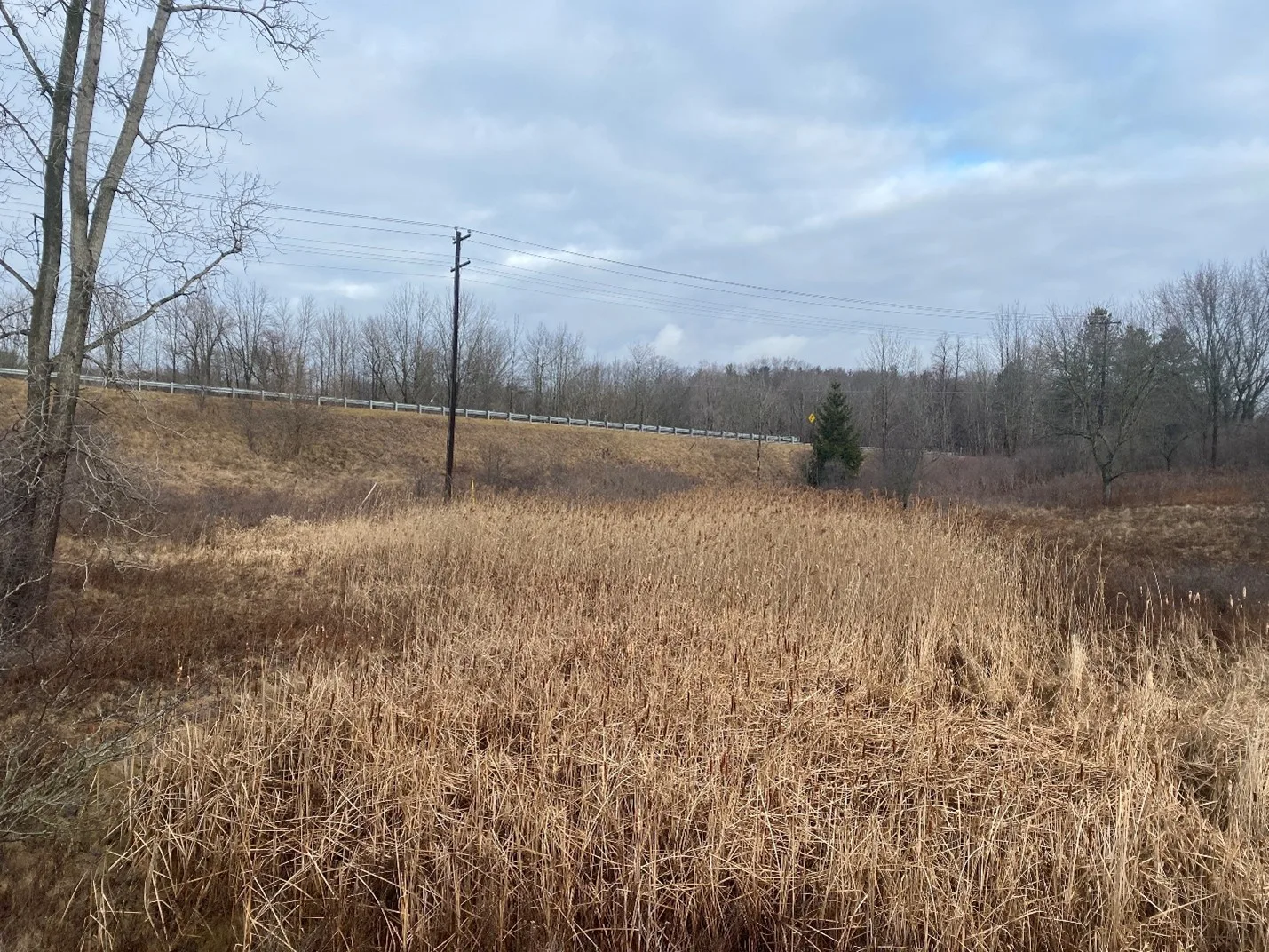
Phragmites grow in dense stands that have the potential to completely outcompete and crowd out native species. Phragmites can grow up to 6 meters tall. You can spot phragmites by looking for tall stands of reeds that, in the fall, produce seed heads that start out purple and brown, eventually turning white and fluffy over the winter. The leaves start out green during the spring and summer, but turn completely brown in the fall and winter.
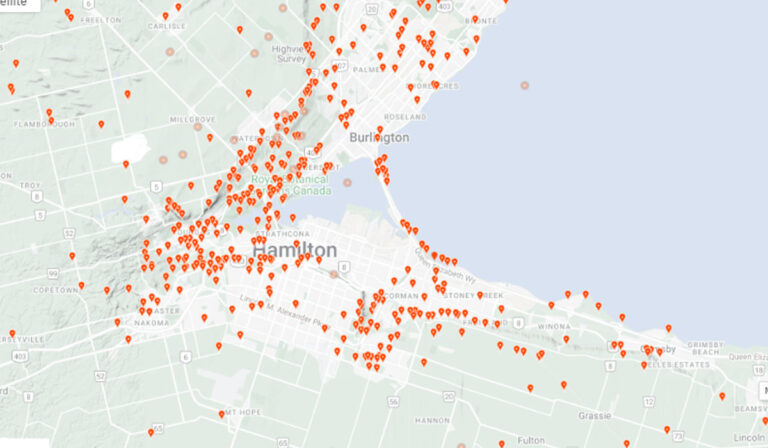
In Hamilton, Phragmites is very widespread and can be seen in a variety of environments. Often, large stands take over wet roadside ditches near highways, as well as stormwater ponds, wetlands, and other seasonally wet environments with good sunlight.
Why is it a problem?
Phragmites use their long root systems to reach into ponds and across obstacles to find good spots to grow. Phragmites can also produce over 2,000 seeds per year, and the spread of these seeds through wind can allow it to find new places to grow. This plant can also spread from root fragments, so if chunks of roots or stems are taken into environments, new plants can grow from these fragments. Once Phragmites enters an environment, these features make it very difficult to get rid of.
These dense stands make wildlife movement difficult and provide poor habitat and food supply. Unlike native grasses and bullrushes, amphibians, reptiles, and fish struggle to move through phragmites because they grow so densely. Along roadsides, Phragmites grows so tall it can make driving dangerous, as tall stands can obstruct lines of sight.
Managing Phragmites
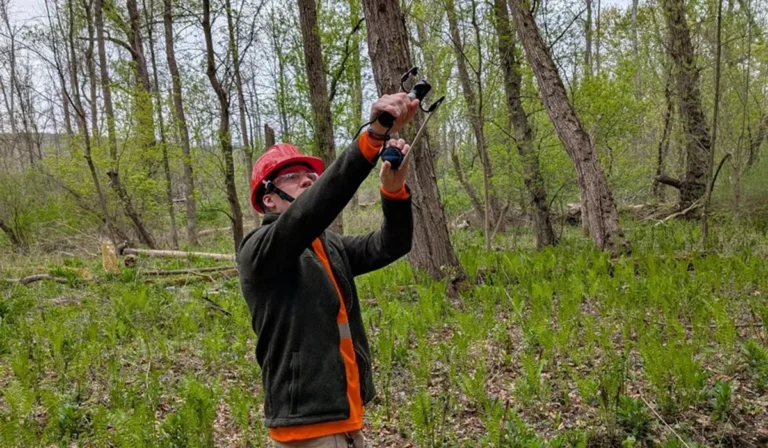
To manage phragmites, HCA staff first identify and map the populations of Phragmites on the landscape. Next, staff determine what populations are suitable for a cut-to-drown, spading, or chemical treatment.
Cut-to drown
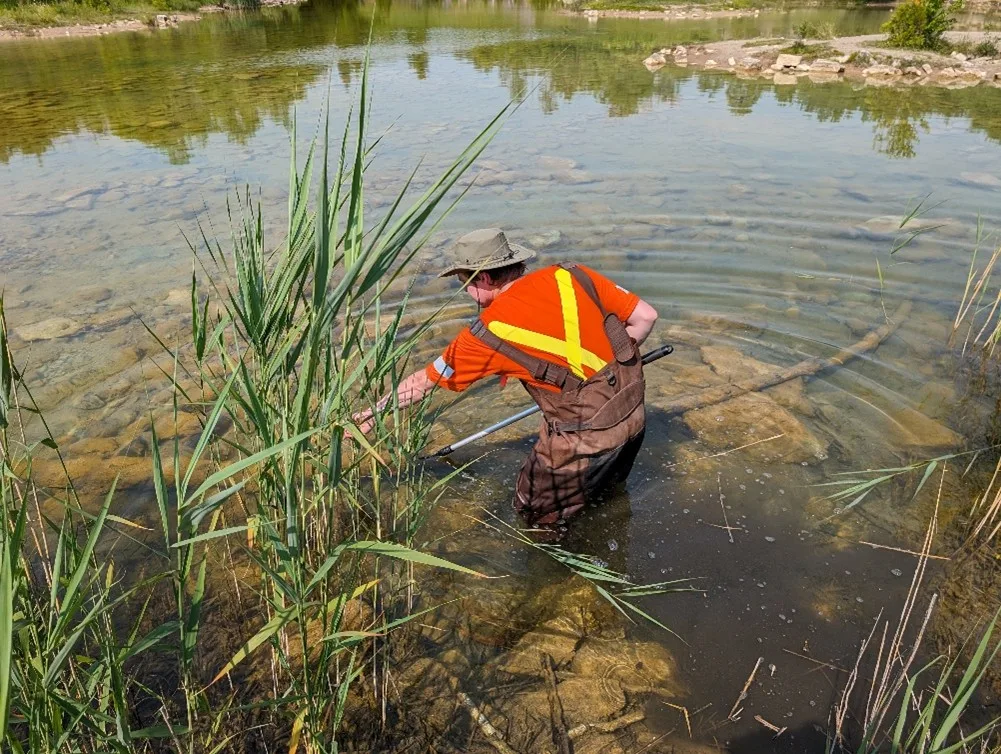
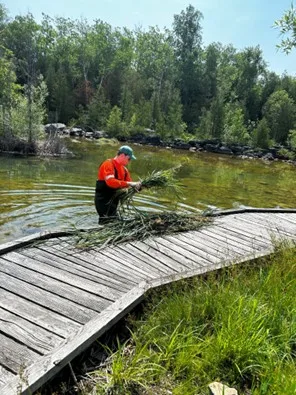
Cut-to-drown technique works well for Phragmites in water, and does just as the name suggests. By cutting the stalks below the water, it cuts off the Phragmites oxygen supply and drowns them.
How to: Using a cane cuter, staff cut the stems below the water as low as possible.
Spading
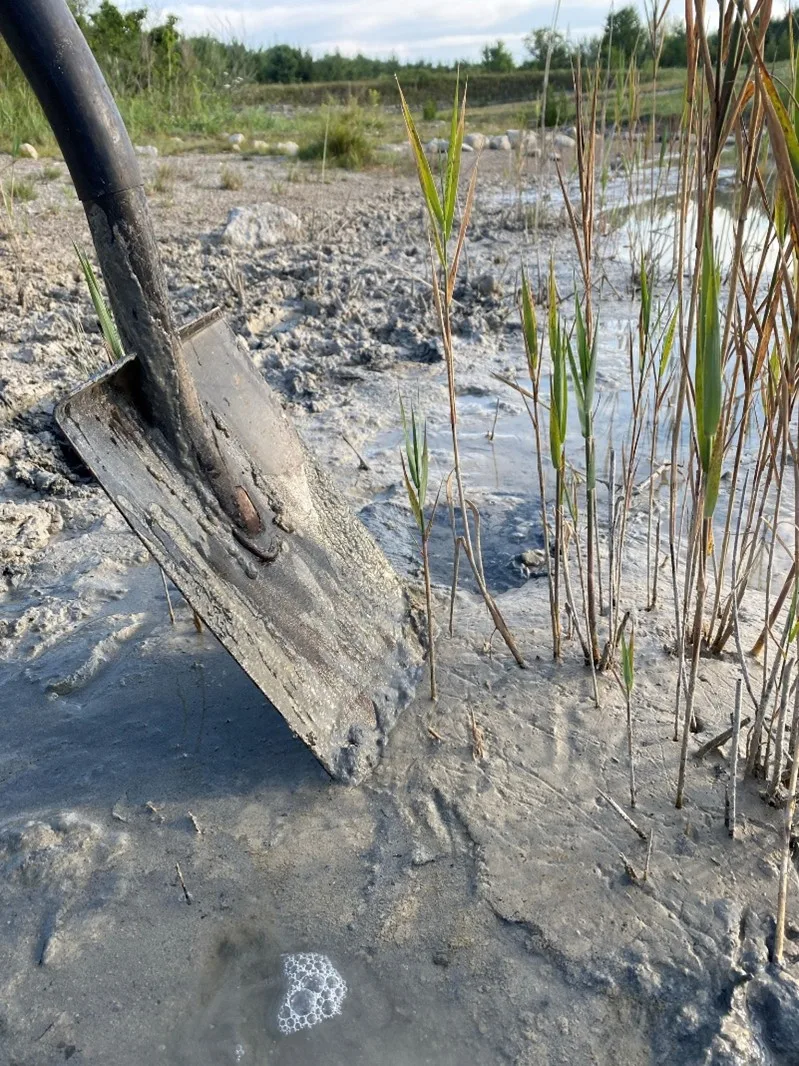
Spading is a technique that works well on sandy to soft soil on land and is done by cutting the stalk below the surface.
How to: Using a spade, staff make a cut to the stalk 5 centimeters below the surface at a 45 degree angle.
HCA staff will use chemicals to treat phragmites on dry land to limit the risks to aquatic ecosystems. Combining all these management techniques have allowed the HCA to manage over 12 hectares of phragmites since 2021. These include Valens Lake Conservation Area, which has seen a big reduction in the largest patches since work began there in 2022, as well as Saltfleet Conservation Area in Stoney Creek, where staff have been working hard to keep out invasive species from the sensitive wetlands ponds built there.