Lake Ontario Communities invited to explore solutions for a changing shoreline
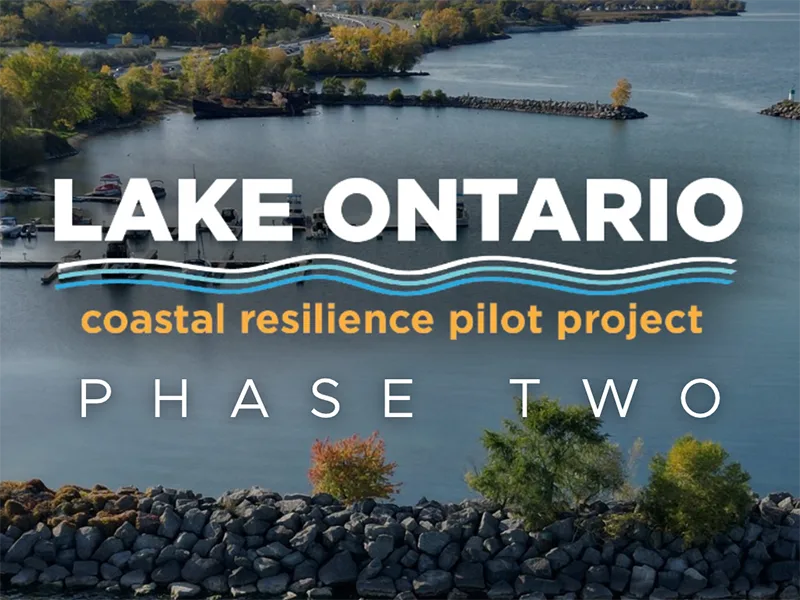
The Hamliton Conservation Authority (HCA), together with Conservation Ontario, Niagara Peninsula Conservation Authority, and Conservation Halton, is inviting everyone who lives, works, and spends time along Lake Ontario’s shoreline to take part in the next phase of the Lake Ontario Coastal Resilience Pilot Project, exploring how communities can prepare for flooding, erosions, and climate change.
Earlier this year, community members shared their experiences, observations, and what they value most about the shoreline. Building on that feedback and ongoing technical studies, the project is now moving from understanding shoreline challenges to exploring potential solutions.
Through five community open houses and an interactive online activity this November, participants will have the opportunity to:
- Learn about different ways to manage shoreline risks, from nature-based solutions to hybrid approaches and engineered structures.
- Explore how adaptation approaches might work in different locations and understand their benefits and trade-offs.
- Review draft updated mapping for flooding, erosion and dynamic beach hazards for Niagara and Halton areas, along with climate change projections.
Open houses will take place November 17 to 19, across the study area between Niagara-on-the-Lake and Oakville.
Tuesday, November 17 – Halton Region
- 2 to 4:30 PM | Art Gallery of Burlington, 1333 Lakeshore Rd., Burlington
- 6 to 8:30 PM | Trafalgar Park Community Centre, 133 Rebecca St., Oakville
Wednesday, November 18 – Hamilton
- 6 to 8:30 PM | The Lakeview by Carmen’s, 180 Van Wagners Beach Rd., Hamilton
Thursday, November 19 – Niagara
- 2 to 4:30 PM | Port Dalhousie Lions’ Club, 201 Main St., St. Catharines
- 6 to 8:30 PM | Elizabeth Street Pumphouse, 447 Elizabeth St., Grimsby
Open houses are drop-in style, and attendees can stop by anytime during those hours. RSVPs are appreciated to help us prepare but not required.
There is no one-size-fits-all solution for Lake Ontario’s shoreline. Different areas face different challenges, and community feedback is an important part of understanding which approaches may be appropriate for different areas along the shoreline.
The feedback gathered during this phase will be considered alongside technical findings to help inform future coastal resilience, management, and policy recommendations, with further community engagement planned for 2027.
To learn more, RSVP for an open house or participate online, visit: https://lakeontariocoastal.ca/
Quotes
“Shoreline flooding and erosion are challenges we share with neighbouring communities, and working together helps us plan for the long term. This next phase invites people who live, work and spend time along the shoreline to explore different approaches and share their perspectives, helping inform practical recommendations to reduce risks to people, property and the natural environment.”
Mike Stone, Senior Manager, Watershed Planning, Stewardship & Ecological Services, Hamilton Conservation Authority
“Working alongside community members who know the shoreline best has been one of the most valuable parts of this project. As we move into this next phase, it’s important that we continue learning together, exploring potential solutions, and making sure the final Coastal Resilience Management Plan reflects both the science and the knowledge of the communities who live, work, and spend time along Lake Ontario.”
Brendan Buggeln, Manager, Natural Hazard Management and Resiliency, Niagara Peninsula Conservation Authority
“Those who live, work and recreate along the Lake Ontario shoreline represent a diverse and interconnected community. It is imperative that the knowledge, opinions and expertise of those in the shoreline community be integrated into the Coastal Resilience Management Plan. The upcoming phase of this project invites those people who are connected to the shoreline to provide their input and help create that plan.”
Charles Priddle, PhD, Senior Manager, Regulations and Coastal Management Program, Conservation Halton
About Lake Ontario Coastal Resilience Pilot Project
The Lake Ontario Coastal Resilience Pilot Project is a regional initiative in partnership with the HCA, Conservation Ontario, Niagara Peninsula Conservation Authority, and Conservation Halton, alongside municipalities, Indigenous communities, and other project partners.
The project covers approximately 100 kilometres of Lake Ontario shoreline, from Niagara-on-the-Lake to Oakville, excluding Hamilton Harbour.
Funded through Natural Resources Canada’s Climate-Resilient Coastal Communities program, as part of Conservation Ontario’s Adapting to Coastal Hazards Across the Great Lakes initiative, the project brings together technical analysis and community knowledge to support long-term coastal resilience planning.